"One frequently used rule of thumb for retirement spending is known as the 4% rule. It's relatively simple: You add up all of your investments, and withdraw 4% of that total during your first year of retirement. In subsequent years, you adjust the dollar amount you withdraw to account for inflation. By following this formula, you should have a very high probability of not outliving your money during a 30-year retirement, according to the rule."
Here's an illustration.
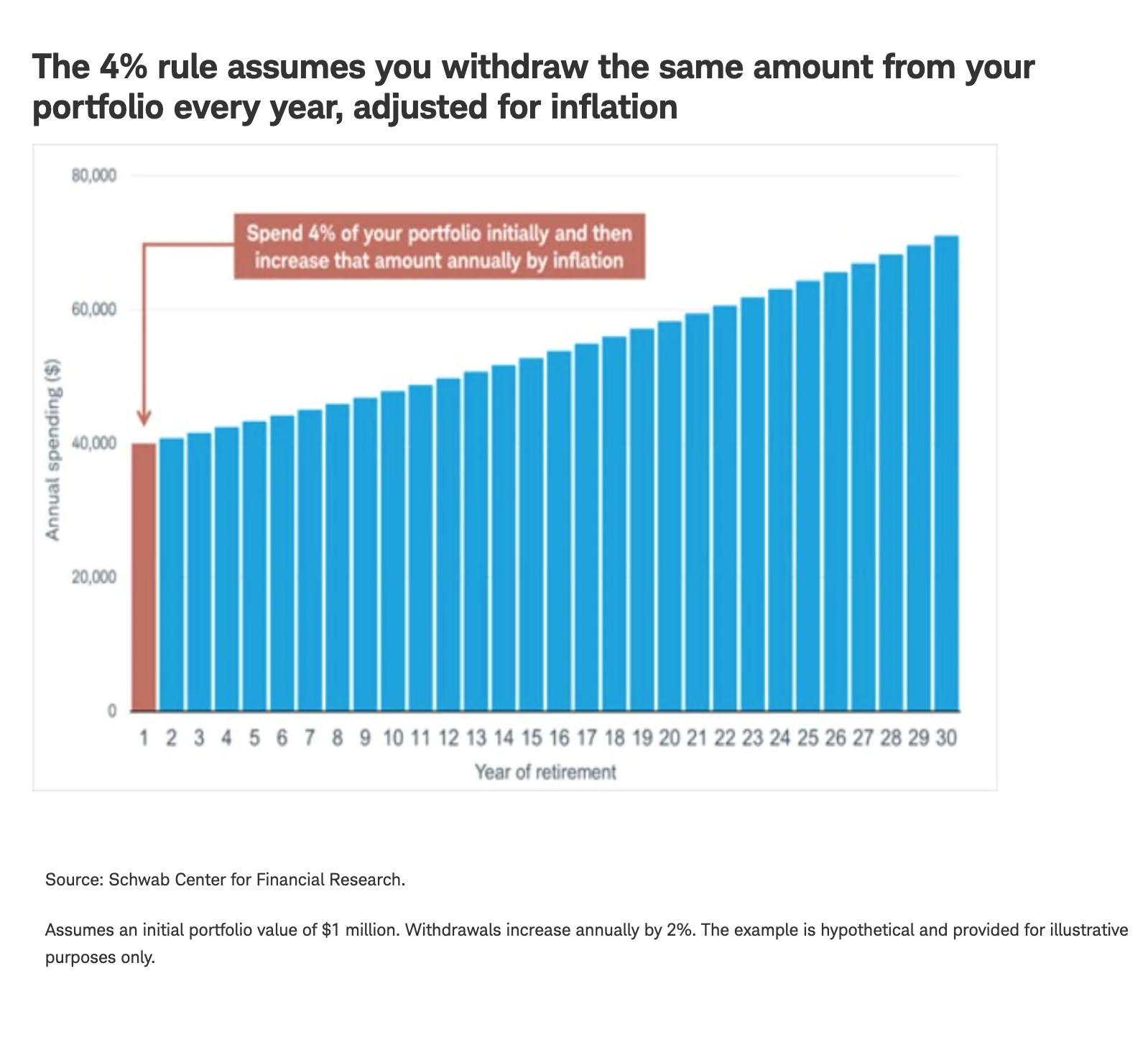
The description comes from this article by Schwarb
The question is whether it's fair or not.
While the 4% rule is a reasonable place to start, it doesn't fit every investor's situation. Schwarb favours basing it on your own inflation rate. That seems more than reasonable. Of course, expenditure doesn't tend to be consistent over time. We all know that if you are recently retired, fit and healthy, you may want to spend more than 4%. As such you need to be clear about the consequences.
If you can live of 2%...and whilst that's only 2% difference to the 4% rule, the odds of running out of money are remote. As such, how much you withdraw does have consequences, especially around 4%.
The key in all these situations is digging deeper into how you invest, your risk and your expenditure profile. And of course, talking through your ideas and thoughts with someone independent.
Want a conversation?